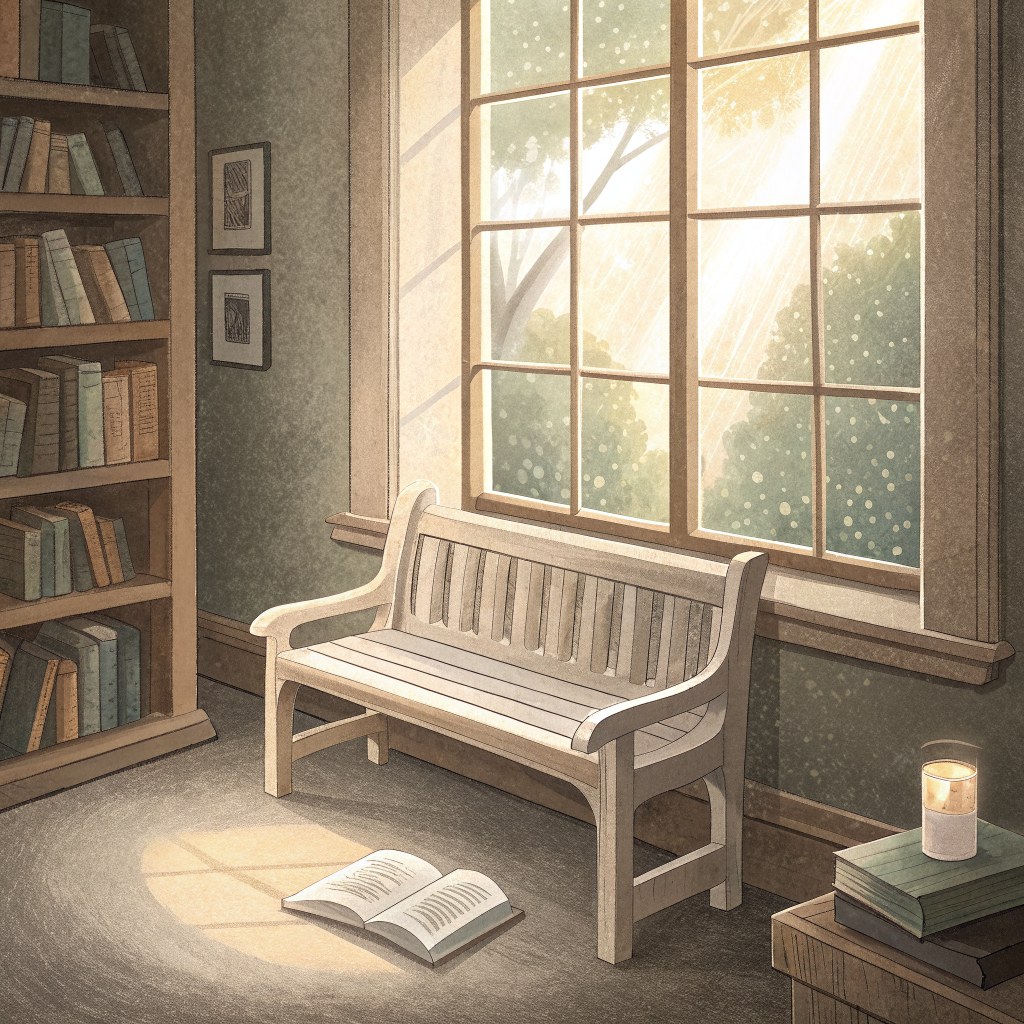
The library got a new bench on a Tuesday, and nobody sat on it.
It was small and pale and smelled of fresh wood, tucked into the reading corner where Ava always went after school. The old bench had gone soft and lovely over years of readers. This new one was stiff and shy, still learning how to be a bench, and it sat there quite alone by the window.
Beside it, Ava noticed someone new too — a girl with a plaster on one knee, holding a book upside down and not really reading it. She was new to the town, the librarian had said. New to everything.
"You can share," Ava said, patting the pale bench. "It's new as well. It doesn't know anyone yet."
The girl looked at the bench, then at Ava. "Is it a good bench?"
Ava thought about fibbing — about saying it was the best bench, the softest, the finest in the whole library, just to make her stay. But that would be a story the bench couldn't keep.
"It's a bit hard, honestly," Ava said. "And it creaks. But the window's the good part. You can watch the pigeons landing on the wire."
The girl almost smiled. She sat. The bench creaked exactly as promised, and she laughed a small laugh at that, because it was funny to be warned about a creak and then hear it happen.
"I moved here on Saturday," she said. "I don't like it yet."
"You don't have to yet," Ava said. "I didn't like the town swimming pool for a whole year. The floaty rope smelled funny. Then one day it just — didn't smell funny anymore."
"What changed?"
Ava shrugged. "Me, I think."
They sat with that for a while, the way you can sit quietly beside someone you've only just met and not feel you have to fill it up. Outside, a pigeon landed on the wire, wobbled, and sorted itself out.
"That book's upside down," Ava said gently.
The girl went very still, then turned it the right way up. Her cheeks went a little pink. "I know. I was just — holding it. So I'd look like I was doing something."
Ava could have pretended not to have noticed the pink cheeks. Instead Ava said, "I do that too. When I don't know where to put myself, I hold a book so my hands have a job."
The girl looked up properly then, as though something had unlatched. "Really?"
"Really. Once I held a book for a whole assembly and never read a single word."
This time she laughed for real, and the new bench creaked again as she settled back, and it wasn't such a lonely creak anymore.
They read after that — actual reading, both books the right way up. Ava pointed out the shelf with the sea stories and the one with the fold-out maps, and where the radiator was warmest, and which chair the library cat chose on cold days. Small true things. Nothing dressed up to be more than it was.
When it was time to go, the girl ran her hand along the pale wood. "It's still a bit hard," she said.
"It'll soften," said Ava. "Benches do. You just have to keep sitting on them."
"Same time tomorrow?" the girl asked, and there it was — the whole day suddenly worth more than it had been.
"Same bench," Ava said.
At home, in the low yellow light of the bedside lamp, Ava thought about the pale new bench with two people's warmth left in it now, and how you could tell someone the plain truth — the creak, the hardness, the funny-smelling rope — and they stayed anyway. They stayed because of it.
The pillow was soft in the way old kind things are soft. Ava pulled the blanket up and let the day settle, page by quiet page, until the reading corner and the pigeons and the small new laugh all folded gently closed, and sleep turned the last light down.